In high-temperature industrial processes, accurate temperature measurement depends not only on the thermocouple itself but also on the protection tube surrounding the sensing element. When a thermocouple is exposed to molten metal, furnace atmospheres, or other aggressive environments, rapid heating and cooling can create severe thermal stresses in the protective material. If the protection tube cannot accommodate these temperature changes, cracking, deformation, or premature failure may occur. For this reason, thermal shock resistance has become an important consideration when selecting thermocouple protection tubes for demanding applications. Silicon nitride thermocouple protection tubes are particularly suited to these conditions because they combine low thermal expansion, relatively high thermal conductivity, high mechanical strength, and resistance to high-temperature corrosion. Cerafra's silicon nitride thermocouple protection tubes are designed for temperature measurement in molten non-ferrous metals and other high-temperature environments, with a maximum service temperature of 1400°C at atmospheric pressure.
A thermocouple protection tube can experience significant temperature gradients when it moves between different thermal environments. For example, the outside surface of a tube may be heated rapidly while the inner surface surrounding the thermocouple remains at a lower temperature. Different regions of the ceramic therefore attempt to expand or contract at different rates. This mismatch produces internal thermal stress, and repeated cycles can eventually initiate cracks if the material and tube design cannot absorb the stress.
The challenge becomes more severe in molten-metal temperature measurement. A protection tube may encounter high-temperature aluminum, copper, zinc, or magnesium alloys and then undergo cooling or repositioning. In these applications, thermal shock resistance must work together with mechanical strength, corrosion resistance, and resistance to molten-metal wetting. A tube that survives high temperature under steady conditions may still have difficulty with repeated thermal cycling if its thermal expansion behavior is unsuitable. Cerafra specifies thermal shock resistance of approximately 700–800°C for its silicon nitride thermocouple protection tubes, together with a flexural strength above 600 MPa and fracture toughness of at least 6.5 MPa·m¹/².
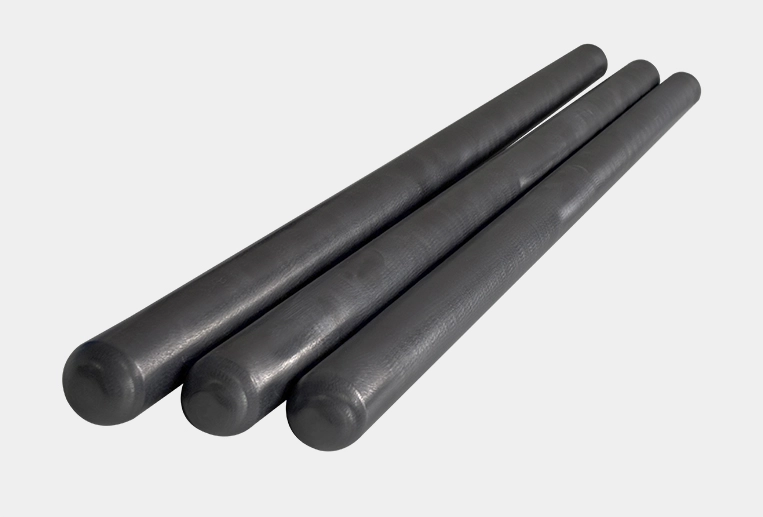
Thermal shock resistance is not controlled by a single material parameter. It results from the interaction of thermal expansion, thermal conductivity, mechanical strength, elastic properties, fracture toughness, tube geometry, and the temperature difference experienced during operation. A material with a low tendency to expand, efficient heat transfer, and sufficient resistance to crack growth can better tolerate sudden temperature variations.
Silicon nitride is useful in this respect because its thermal and mechanical properties complement each other. Cerafra's published specifications list a Young's modulus of 260–280 GPa, flexural strength above 600 MPa, fracture toughness of at least 6.5 MPa·m¹/², and Vickers hardness above HV 1400. These properties help the protection tube maintain structural integrity when it is exposed to mechanical impact, thermal cycling, and high-temperature operating conditions.
For engineers selecting a thermocouple sheath, it is therefore important to look beyond the maximum temperature rating. Questions such as "What is the coefficient of thermal expansion?", "How quickly can heat pass through the tube wall?", "How does the material respond to repeated thermal cycling?", and "Can the tube resist molten-metal corrosion and mechanical loading?" can be just as important as the nominal service temperature.
The coefficient of thermal expansion indicates how much a material changes dimension when its temperature changes. A lower coefficient generally means that the material undergoes less dimensional expansion or contraction for a given temperature difference. This can reduce the magnitude of thermal stresses generated during rapid heating and cooling, particularly when different parts of a component experience different temperatures.
Cerafra specifies a coefficient of thermal expansion of approximately 3.2–3.4 × 10⁻⁶ K⁻¹ from 20°C to 1000°C for its silicon nitride thermocouple protection tubes. This low thermal expansion behavior contributes to dimensional stability and thermal shock resistance at elevated temperatures.
However, low thermal expansion alone does not guarantee reliable thermal shock performance. If heat cannot move through the material efficiently, large temperature differences may remain between the outer and inner surfaces. The material must therefore balance low expansion with adequate thermal conductivity. This is one reason why silicon nitride is attractive for thermocouple protection: its thermal properties can help reduce temperature gradients while its low expansion limits the strain generated by temperature changes.
Thermal conductivity directly influences how quickly heat moves from the process environment through the protection tube to the thermocouple junction. A protection tube with relatively efficient heat transfer can reduce thermal lag, allowing the thermocouple to respond more rapidly when process temperature changes.
This characteristic is particularly important for process control. If the protection tube responds too slowly, the measured temperature may lag behind the actual process temperature. In applications involving molten metal or rapidly changing furnace conditions, this delay can affect temperature adjustment and process stability.
Cerafra's published thermal conductivity range for its silicon nitride thermocouple protection tubes is 16–22 W/(m·K). The product is also designed with relatively thin walls, allowing heat to reach the thermocouple efficiently. Cerafra states that its protection tubes can provide rapid temperature response and measure molten-metal temperature within approximately one minute under its specified application conditions.
This creates an important design balance. Increasing wall thickness can improve physical protection, but excessive thickness can increase thermal response time. For high-temperature temperature measurement, engineers therefore need to consider wall thickness, thermal conductivity, thermocouple construction, immersion depth, and the actual process temperature together rather than selecting the tube solely according to its maximum temperature rating.
Silicon nitride (Si₃N₄) is an advanced structural ceramic that combines thermal, mechanical, chemical, and electrical properties useful for thermocouple protection. In high-temperature environments, the protection tube must separate the thermocouple from the process while still allowing heat to reach the sensing junction. At the same time, it needs to resist corrosion, erosion, thermal shock, and mechanical damage.
Cerafra's product data identifies several characteristics relevant to this application. The silicon nitride protection tube has a bulk density of about 3.2 g/cm³, porosity of no more than 1.5%, flexural strength above 600 MPa, thermal conductivity of 16–22 W/(m·K), a thermal expansion coefficient of 3.2–3.4 × 10⁻⁶ K⁻¹, and a stated maximum service temperature of 1400°C at atmospheric pressure. The material also provides electrical insulation, which can help isolate the thermocouple from electrical interference in the surrounding process equipment.
Another important consideration is chemical interaction with molten materials. Cerafra specifies resistance to many acids, alkalis, and molten metals and describes the material as non-wetting toward many non-ferrous molten metals. This is particularly relevant in aluminum, copper, zinc, and magnesium processing, where protection tube corrosion or molten-metal adhesion can affect service life and potentially contaminate the process.
The combination of thermal shock resistance, low thermal expansion, thermal conductivity, mechanical strength, and chemical stability explains why silicon nitride is considered for demanding thermocouple protection applications rather than simply relying on a conventional ceramic sheath.
Thermal shock resistant thermocouple protection tubes are especially valuable where temperature measurement takes place under repeated heating, cooling, immersion, or high-temperature exposure. Non-ferrous metal processing is one major application area. Silicon nitride protection tubes can be used for monitoring molten aluminum, copper, zinc, and magnesium, where corrosion resistance, non-wetting behavior, and resistance to thermal shock are important for continuous temperature measurement.
Foundries and aluminum casting operations can also require continuous temperature monitoring in molten-metal holding furnaces and casting processes. Beyond metal processing, Cerafra identifies applications in high-temperature chemical processing, powder metallurgy, glass melting furnaces, and ceramic kilns. These environments have different process conditions, but they share a common requirement: the thermocouple must remain protected without excessively slowing temperature response.
For equipment manufacturers and process engineers, choosing a thermocouple protection tube should therefore involve more than comparing temperature limits. Thermal cycling conditions, heating and cooling rates, molten-metal compatibility, corrosion exposure, required response time, mechanical loading, tube dimensions, and thermocouple configuration all need to be considered. A silicon nitride solution can be particularly useful when the application combines high temperature with rapid thermal changes and aggressive process media.
As a manufacturer of silicon nitride ceramic materials and components, Cerafra develops thermocouple protection tubes for high-temperature temperature measurement and molten-metal processing applications. Its product portfolio is based on silicon nitride materials and includes thermocouple protection tubes alongside other silicon nitride ceramic components.
For applications where thermal shock, temperature response, corrosion resistance, and long-term stability must be considered together, selecting the appropriate Thermocouple Protection Tubes material and structure can have a direct impact on measurement reliability and maintenance requirements.